Failure as a Motor for Growth: How Setbacks Really Help Us Move Forward
Markus Bellmann · 7 January 2025 · 5 min read
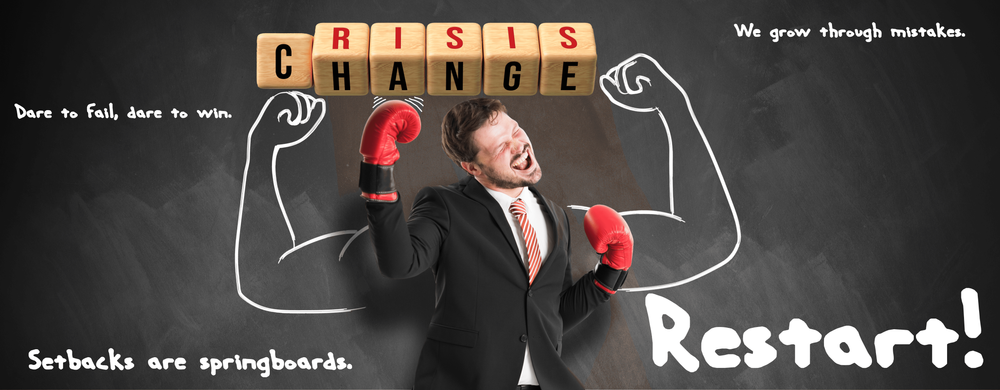
Failure - a word that often provokes a reaction of disappointment, self-doubt and frustration. But failure is more than an end or a setback; it is a valuable resource. The art of dealing with mistakes and learning from them is an essential skill that can greatly advance both personal and professional growth. But how can you really develop this skill and make the most of setbacks?
Redefining Errors: The Key to a Constructive Error Culture
Our societal understanding of mistakes is often characterized by negative connotations. In fact, a mistake is essentially nothing more than a deviation from the planned path - and in many cases, it is precisely these deviations that point the way to creative and innovative solutions. Mistakes should not be understood as failures, but as part of experimentation. If we redefine mistakes so that they are not the end of a project, but a stopover on the way to success, we open up completely new opportunities for ourselves and our teams to expand our own performance and perspective.
Successful Failure as a Life Skill
Successful failure means consciously taking risks and accepting that mistakes will happen. However, the focus should be on gaining valuable insights from every setback. These insights take us a step further and give us a deeper insight into our own abilities and limitations. However, this requires courage: courage to leave the comfort zone, question the status quo and try new things - even at the risk of not everything working out the first time.
One way to fail successfully is to consciously confront mistakes in the form of questions such as:
• What exactly went wrong and why?
• What did I learn that I didn’t know before?
• What alternative approaches can be considered for future projects?
With this technique of targeted reflection, every mistake becomes a step towards a better version of ourselves and our work. Successful failure is therefore a life skill that enables us to actively shape the future.
Feedback as an unused resource – The art of giving and receiving constructive feedback
Feedback is often seen as a formal instruction from above or as an evaluation. But feedback is much more than that; it is the most valuable way to continuously improve and identify blind spots. A good feedback conversation not only shows potential for improvement, but also reinforces existing strengths. It is important to view feedback as a dialogic tool in which both sides - giver and recipient - can learn from each other.
One technique that makes constructive feedback particularly effective is the so-called "feedforward" model: instead of just analyzing the past, a look is taken at concrete recommendations for action for the future. This creates a positive dynamic and focuses on what can be done differently instead of focusing on mistakes. Feedback should therefore be understood as a lively dialogue that opens up space for new ideas and approaches.
Growth Mindset as a pioneer for sustainable development
A growth mindset is the belief that skills and talents can be improved through effort, learning and perseverance. This mindset allows us to see mistakes as necessary steps along the way to success. While a fixed mindset sees mistakes as personal defeats, a growth mindset promotes the willingness to learn from setbacks and even accept them as a prerequisite for deep learning.
An example of growth mindset in practice is competitive sports: top athletes analyze every mistake and every defeat down to the smallest detail and develop new strategies from them. They do not see these setbacks as the end, but use the knowledge gained to improve with each performance. Companies and individuals can learn a lot from this by adapting their strategies flexibly and seeing mistakes as signposts for optimization.
Success analysis: Establishing the “lessons learned” culture
The structured analysis of successes and failures should not only be carried out in exceptional cases, but should be anchored as an integral part of the company culture. The "lessons learned" culture creates the basis for long-term learning and improves the ability to tackle future challenges in a targeted manner. This can be done, for example, through regular team retrospectives in which the successes and the less successful moments are reflected. The analysis should not be seen as a control, but as a shared learning process.
The question "What can we take from this project for the future?" creates a culture of continuous learning and prevents the same mistakes from being repeated. Instead of focusing on short-term successes, the focus is on sustainable growth and continuous improvement - an approach that promotes both individual and team-oriented development processes.
Success stories and inspiration as positive drivers
Too often we tend to use the successes of others as a measure of our own achievements - often combined with a feeling of envy. But instead of being unsettled by the successes of others, we should use them as a source of inspiration. They show us what is possible and give us guidance on our own development paths.
One way to actively promote this is to consciously learn from best practices: What have other companies or people done to be successful? Which strategies and approaches can be adopted and adapted? The willingness to learn from others and to be inspired by their successes broadens your own horizons and promotes an open and curious attitude.
Conclusion: Failure as a path to innovation and success
Failure is not an end point, but a signpost. Every setback offers us the opportunity to recognize our own limits, expand them and grow in a new direction. By establishing a positive culture of failure, adopting a growth mindset and being willing to see feedback and error analysis as part of one's own development, failure becomes an important tool on the path to long-term success.
When we see failure as an opportunity and are inspired by the successes of others, we create the best ideas, the strongest teams and the most innovative companies.